The Real Problem With Hunting Clothing Isn't The Camouflage. It's That You're Wearing Three Different Products.
Every season, hunters spend serious money on jackets, fleeces and trousers that test well in the shop and fall apart by hour six in the field. The reason has almost nothing to do with the pattern — and a growing number of hunters are fixing it a different way.
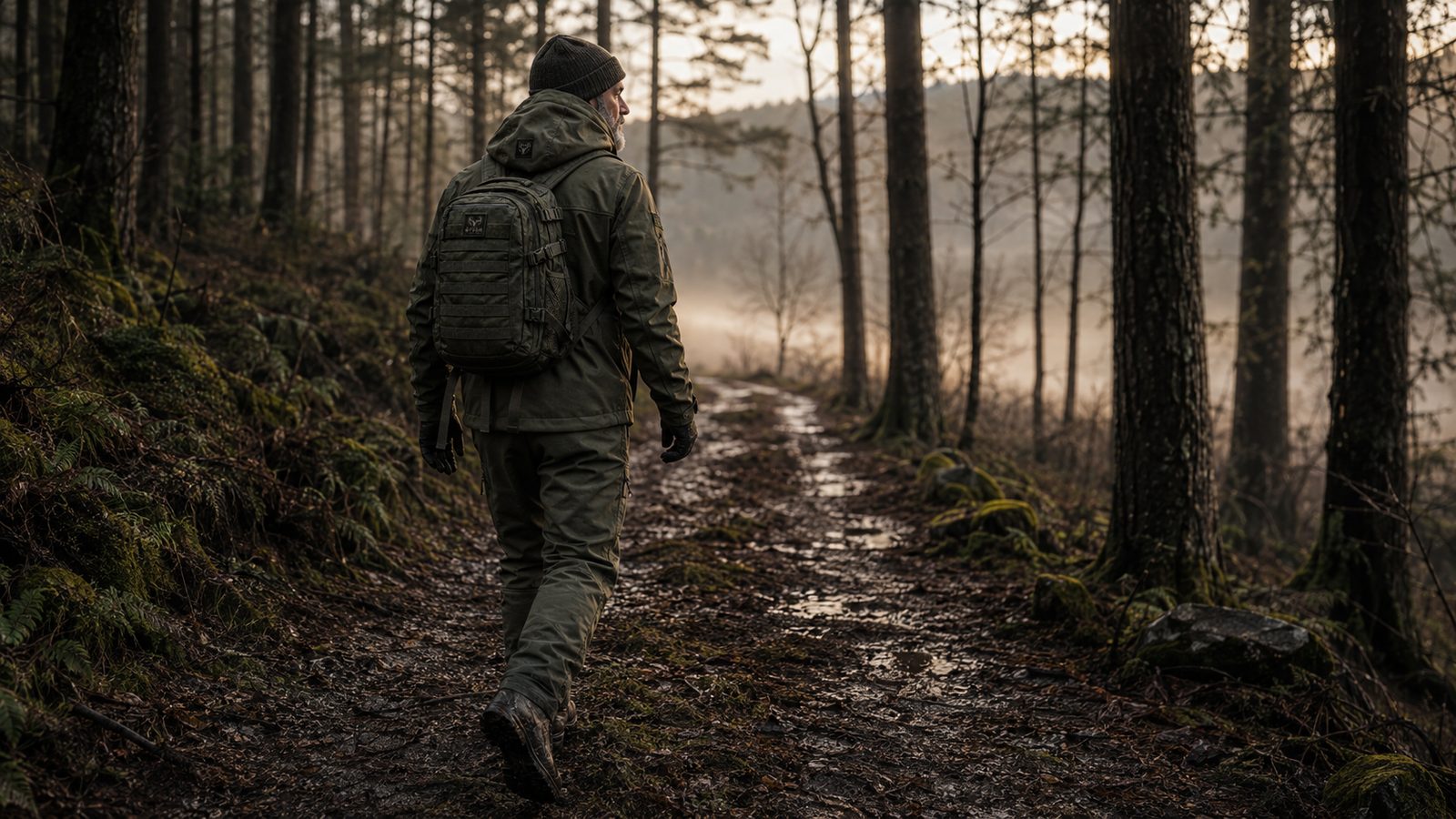
First light on the walk in. This is where most setups start giving themselves away.
Ask a hunter what ruined their last long sit and you will almost never hear "the animal". You hear about the jacket that pulled every time they raised their arms. The pocket that sat under a pack strap exactly when they needed it. The fabric that scraped on every branch and carried further than they would have liked.
None of that shows up on a spec label. Water-column ratings and gram counts are easy to print. What they do not describe is what happens when clothing built for walking, climbing and standing around a campsite gets taken hunting — where the body spends its time crouched, kneeling, waiting, and then moving suddenly.
Any Hunting Suit Feels Fine For Twenty Minutes. The Real Test Starts At Hour Six.
At the truck, everything feels right. It is cold, so you layer up: a base, a fleece, a jacket that fitted well enough in the shop. You set off.
Then the hours start exposing the compromises.
By hour six you are carrying clothing you no longer want to wear, and adjusting something every twenty minutes. Most hunters put this down to bad luck, or to having bought the wrong jacket.
It is usually neither.
The Mix-and-Match Trap
Here is the part almost nobody says out loud: your gear may not be bad. It may simply be fragmented.
Bought separately, seasons apart. Each piece fine on its own — none of them designed to move as one.
A jacket from one brand. A fleece from another. Trousers from a third, bought two seasons later because the first pair wore out. Every piece may be perfectly decent on its own. But they were never designed to move as one thing.
What that actually produces in the field:
- Three different cuts that fight each other across the back and shoulders
- Three sizing charts, so the fit is a compromise before you even leave the house
- Bulk exactly where you need freedom, because layers stack where the shoulder needs to rotate
- Two fabrics rubbing together, which is a noise source that no camouflage pattern can fix
- A colour match that is close, but not right — and close reads as wrong at forty metres
This is the Mix-and-Match Trap, and it explains something that feature lists never do: why a hunter who has spent real money on technical clothing still spends the day adjusting it.
It also removes the blame. You did not necessarily buy badly. You asked three garments that were never designed together to behave like a system.
See the complete system
Jacket and trousers designed, cut and sized as one thing — in six terrain configurations.
See The System →What Changes When It's Built As One System
The alternative is not a better jacket. It is refusing the assembly problem in the first place — designing the outer layer as a single coordinated setup rather than three purchases made years apart.
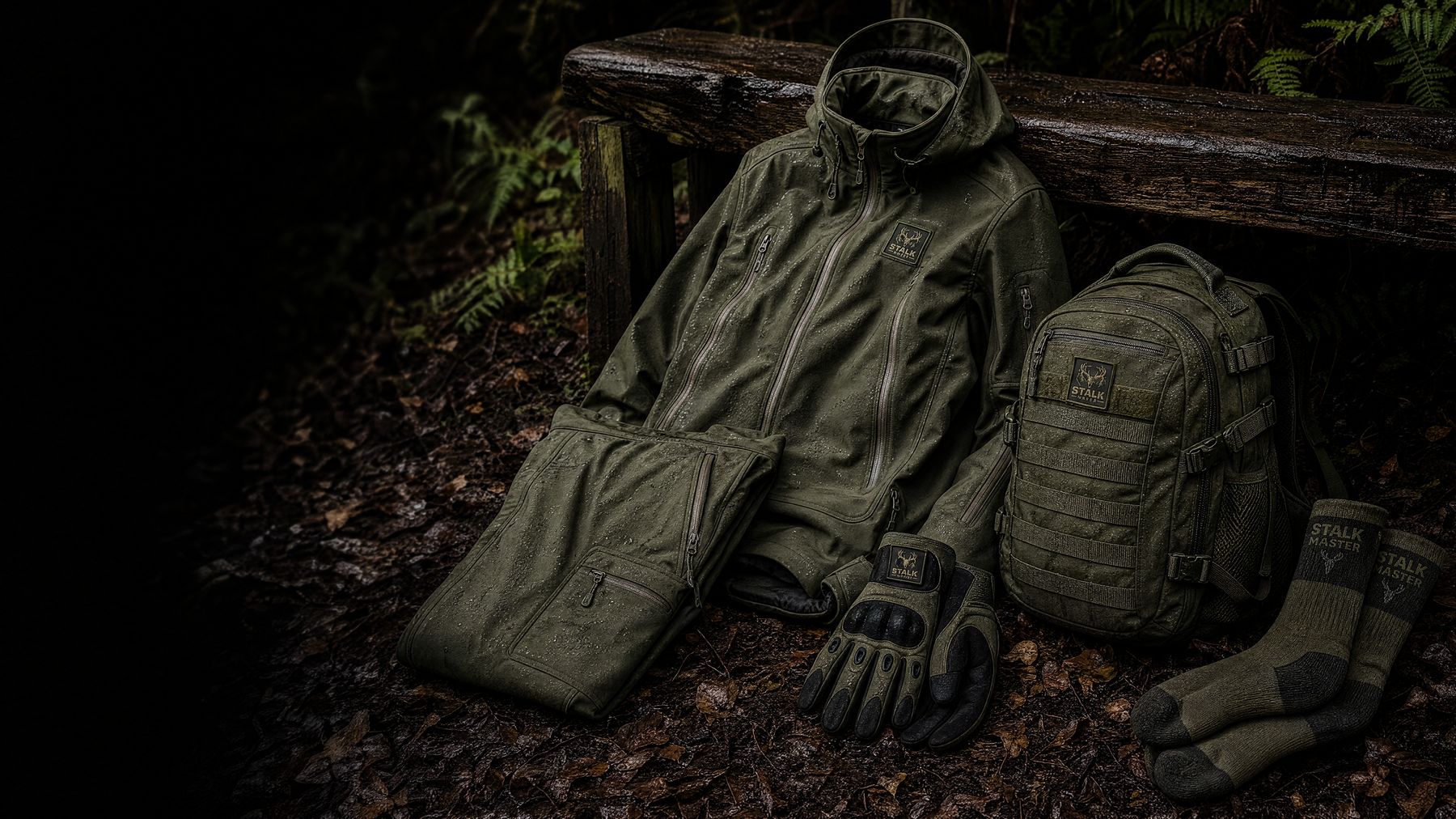
One order, one delivery, one matched setup. Nothing here was chosen to go with anything else after the fact.
StalkMaster calls this One-System Construction. It is not a patented technology, and we are not going to pretend it is. It is a design decision with three consequences you feel in the field.
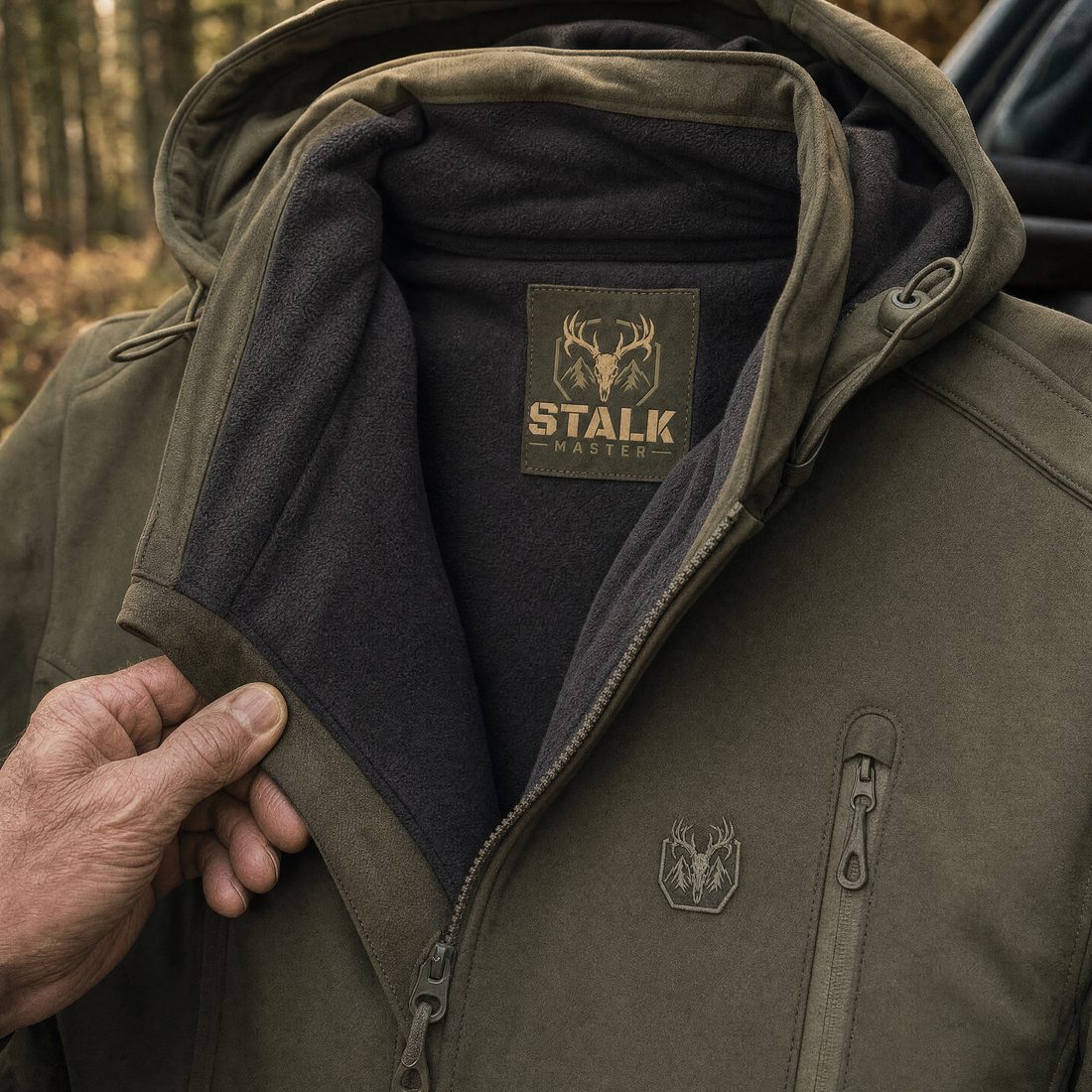
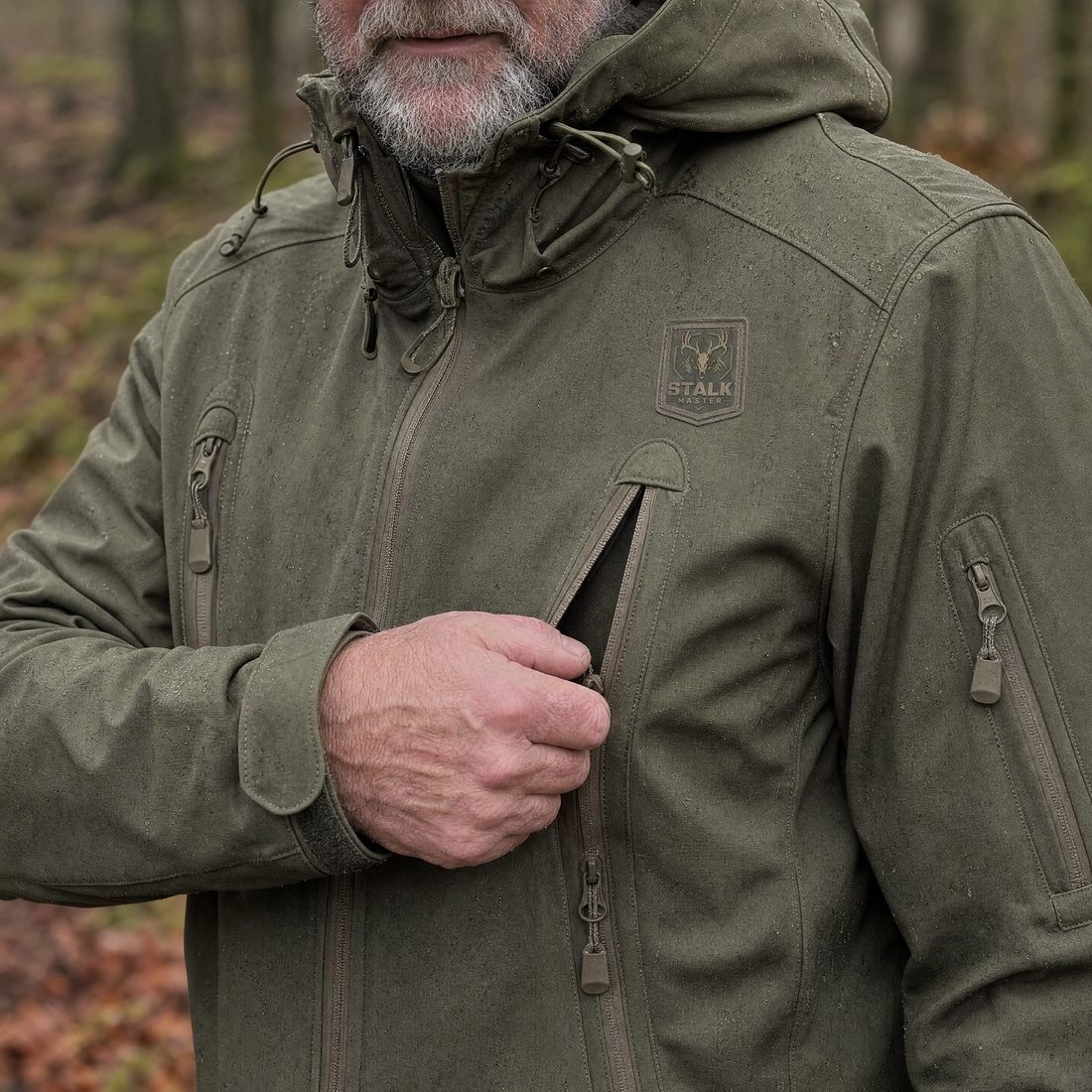
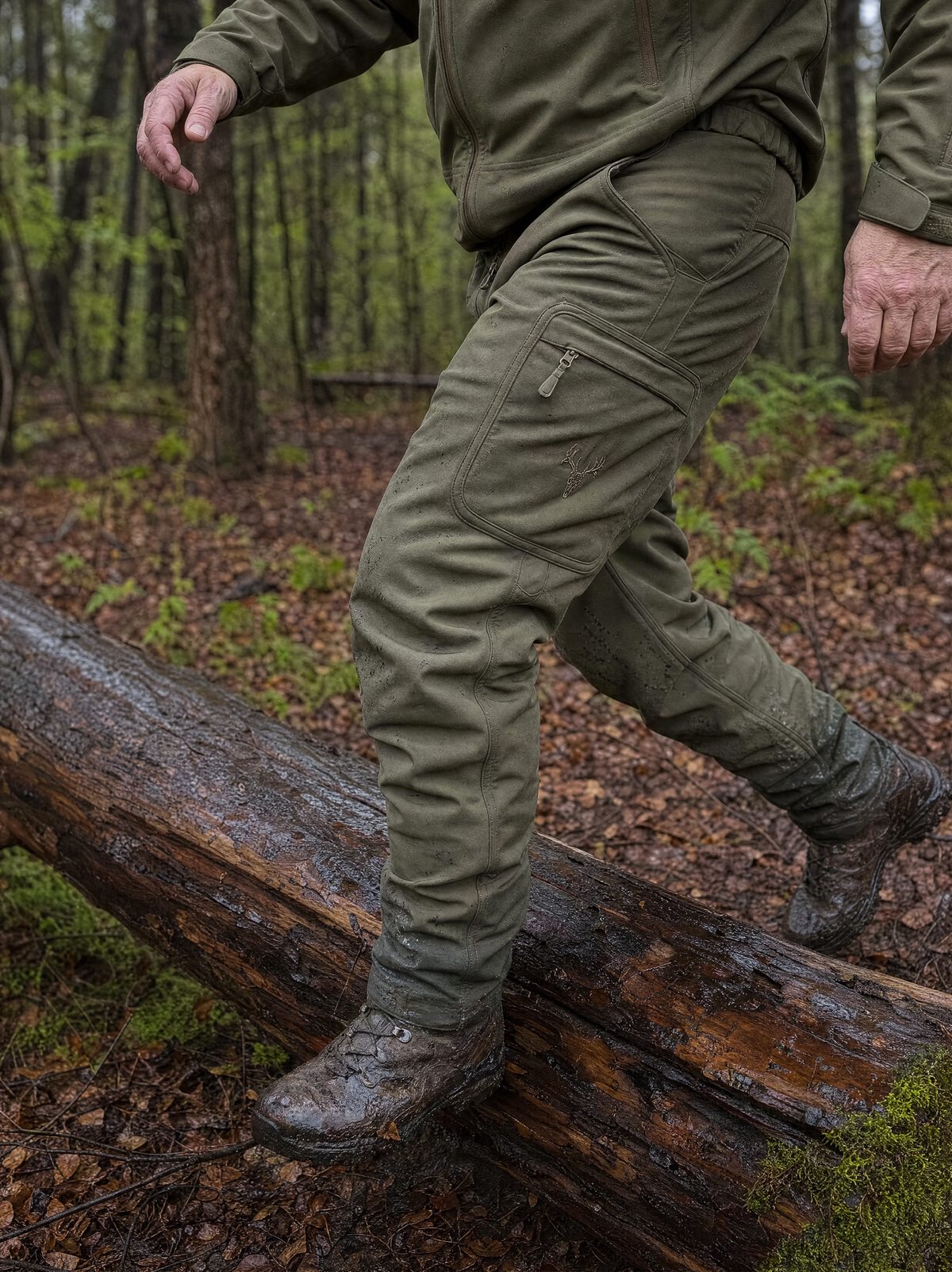
The three decisions that separate a system from a collection of garments.
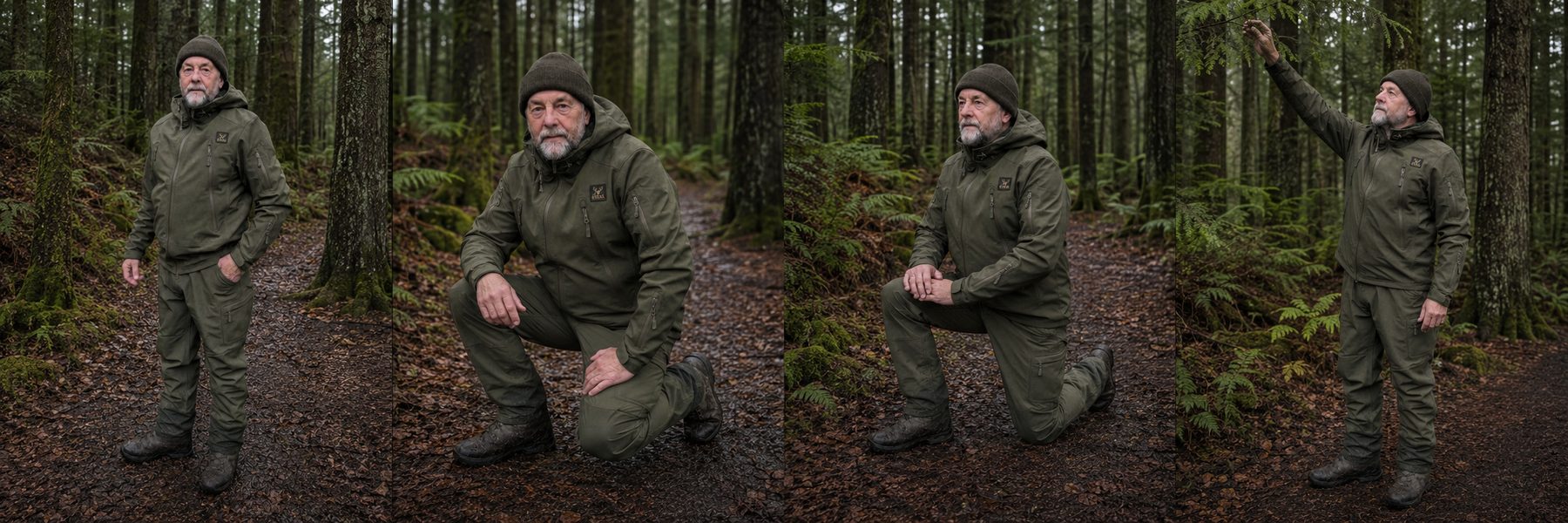
The test that matters: does it still work when the body does?
Built As One vs. Assembled Over Time
| One system | Mix & match | |
|---|---|---|
| Jacket and trousers designed together | ✓ | ✗ |
| One cut, one sizing chart | ✓ | ✗ |
| Matched colourway across the setup | ✓ | ✗ |
| Fleece lining built into the shell | ✓ | ✗ |
| Pockets placed for a seated, harnessed hunter | ✓ | ✗ |
| One decision, one order, one delivery | ✓ | ✗ |
Six Configurations, One System
The same construction comes in six terrain configurations. The point is not that one is "best" — it is that you match the ground you actually hunt, and that the jacket and trousers arrive already matched to each other.
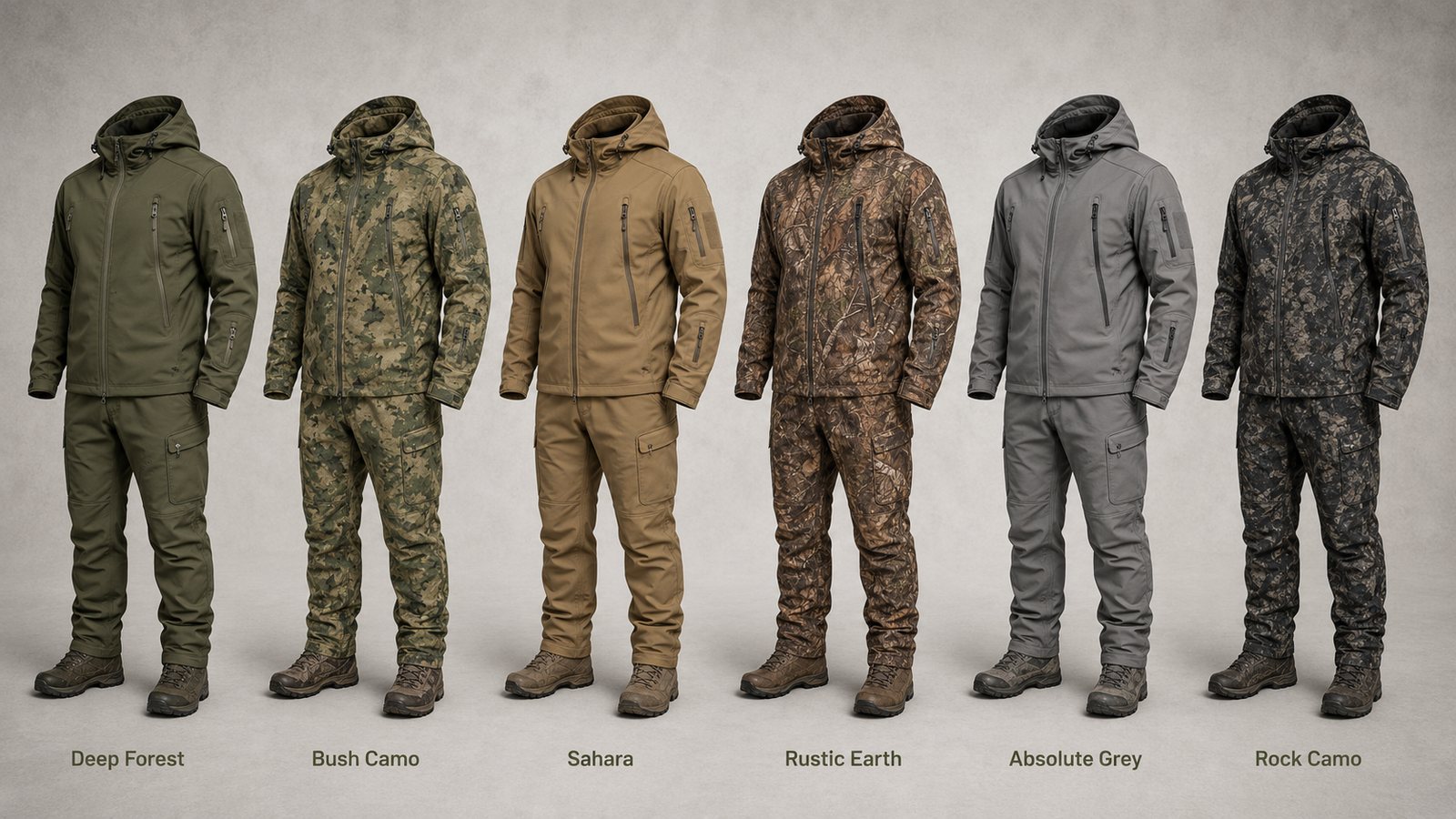
Deep Forest · Bush Camo · Sahara · Rustic Earth · Absolute Grey · Rock Camo — matched jacket and trousers in each.
Choose the ground you actually hunt
Six configurations. Same construction, same fit, same features in every one.
See The Six Terrains →The Fit Problem Nobody Warns You About
There is one more reason assembled setups disappoint, and it has nothing to do with fabric.
Most hunters buy by letter — M, L, XL — across three brands that each mean something different by it. The result is a jacket that is fine standing still and tight across the back when you shoulder up.
The fix is unglamorous and it works: measure a jacket you already own and like the fit of, flat across the chest under the arms, then double it. Compare that number to the chart. You already know how that jacket feels in the field — you are just turning it into a number instead of guessing from a label.
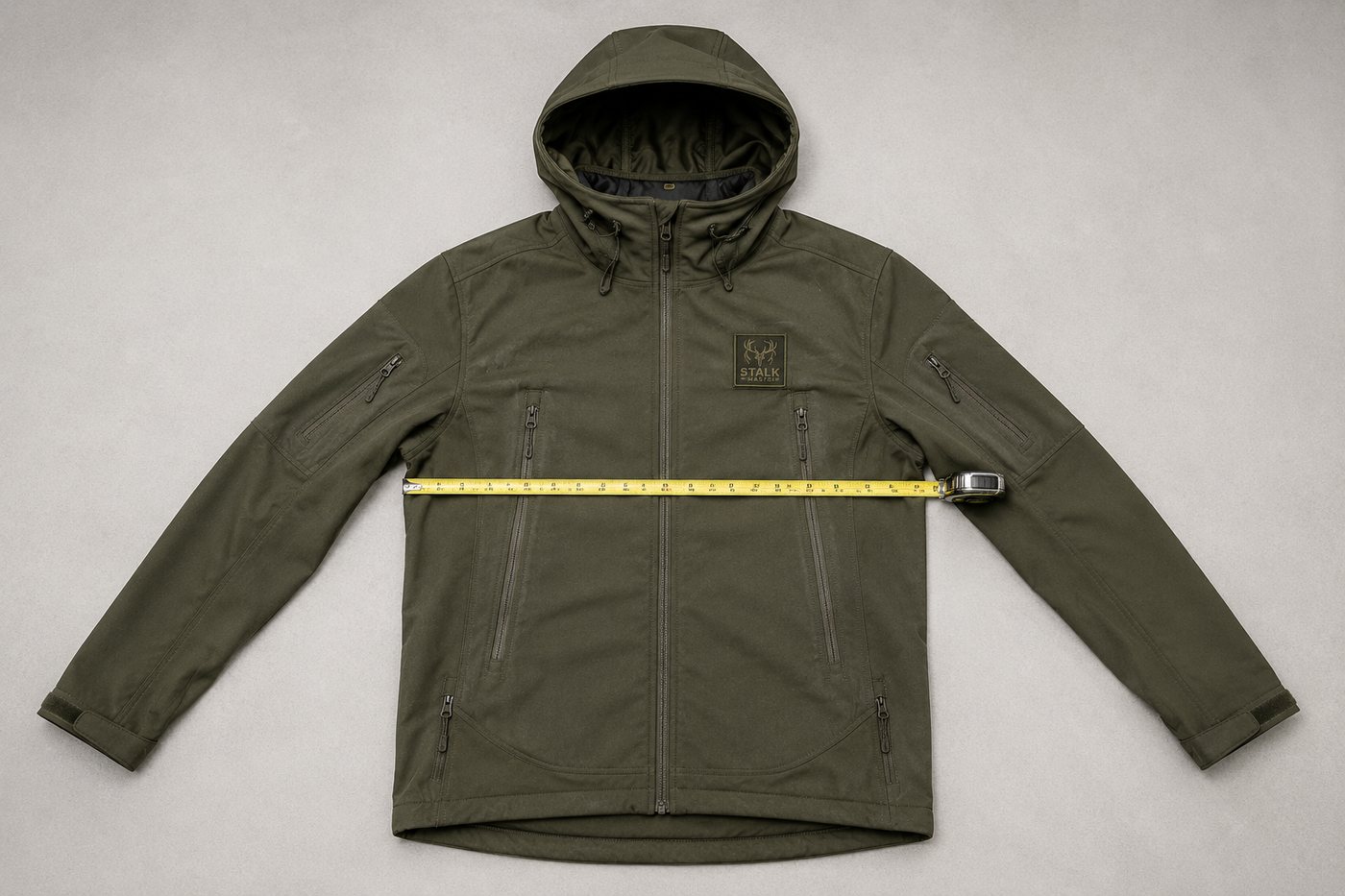
- Take a jacket you already own and like the fit of.
- Lay it flat. Measure straight across the chest, armpit seam to armpit seam.
- Double that number — that's your chest measurement in the flat.
- Match it to the size chart. You're turning a fit you already trust into a number, instead of guessing from a letter.
What Owners Report
The system has been through a full season with owners across Europe before this international release. A selection of what they reported, including the photographs they sent with their reviews:
What It Costs, And What It Replaces
The uncomfortable arithmetic of a fragmented setup is that you never see the total. You see a jacket in one season, trousers in another, and a fleece somewhere in between — three separate decisions that never get added up into one number.
A complete system is the opposite. One number, up front, for the whole outer layer.
Set against a season the framing changes again. A hunter who gets out thirty or forty days a year is paying single-digit money per day out — for the layer that decides whether the day is spent hunting or spent adjusting straps. And the system does not expire when the season does.
One decision instead of three purchases
Choose your terrain and your size. Jacket and trousers arrive matched, in one delivery.
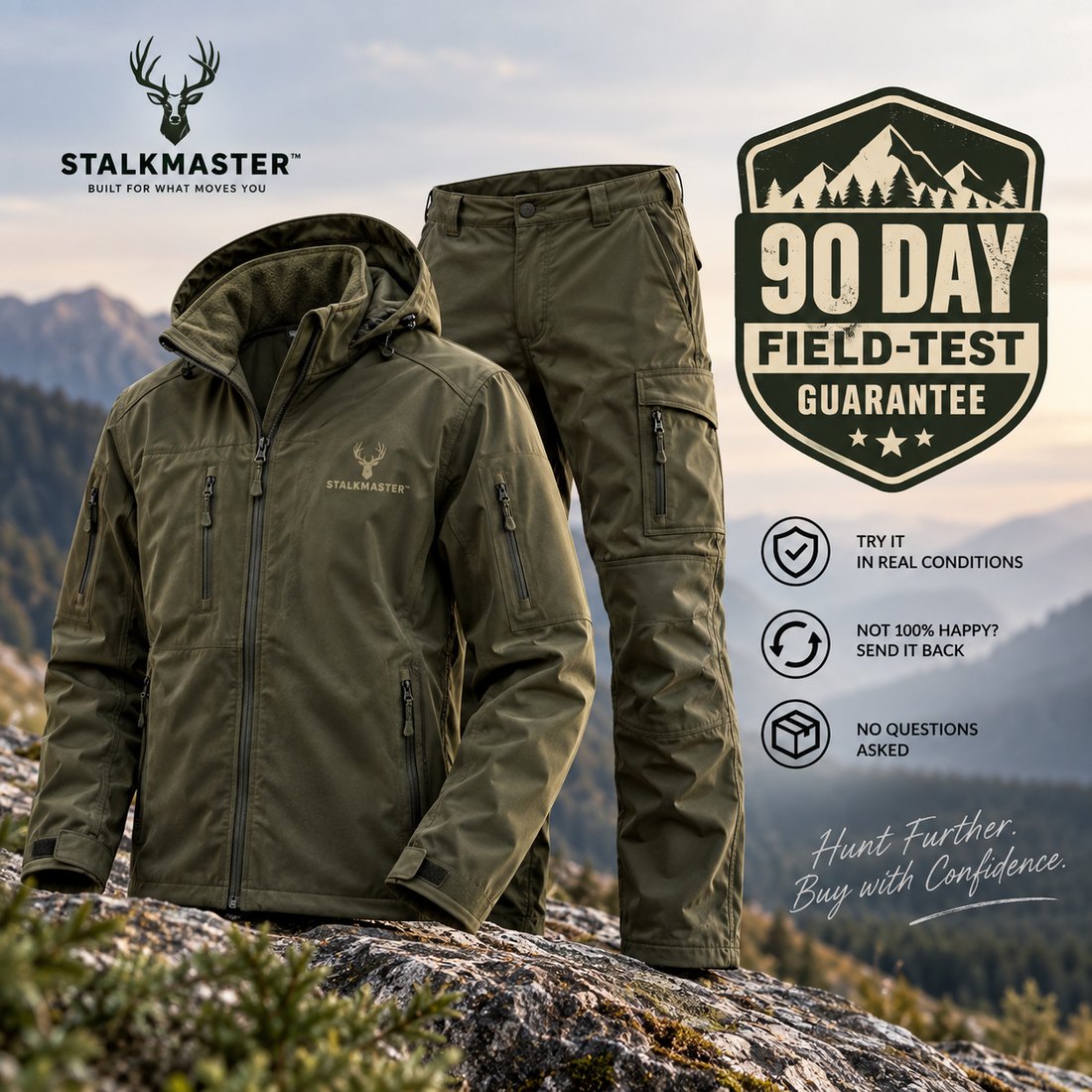
Take $40 Off →The Guarantee, In Plain Terms
Most guarantees on hunting clothing quietly assume you will never really use the product before deciding. This one is written the other way around.
Reader Questions, Answered
Three questions come up more than any others. Straight answers, including where the honest answer is a limitation.
Three Options From Here
At this point there are realistically three.
Option one: keep mixing jackets, fleeces and trousers from different brands, and keep adjusting them every time the conditions change.
Option two: spend more time and more money trying to assemble a properly matched setup yourself, piece by piece, across seasons.
Option three: choose your terrain, choose your size, and receive one complete system designed to work together from the start.
The next long day in the field is coming either way. The only real question is what you will be wearing when it does.
Editor's Note
StalkMaster sells this system direct rather than through retail, which is why you will not find it in shops. The complete set — jacket and trousers, matched colourway and size — is currently $40 below its reference price in the Opening Season Sale, with free worldwide shipping and the 90-day field-test guarantee applied to every order.
Terms, current pricing and the six configurations are all shown on the product page.